
Last updated November 23, 2026
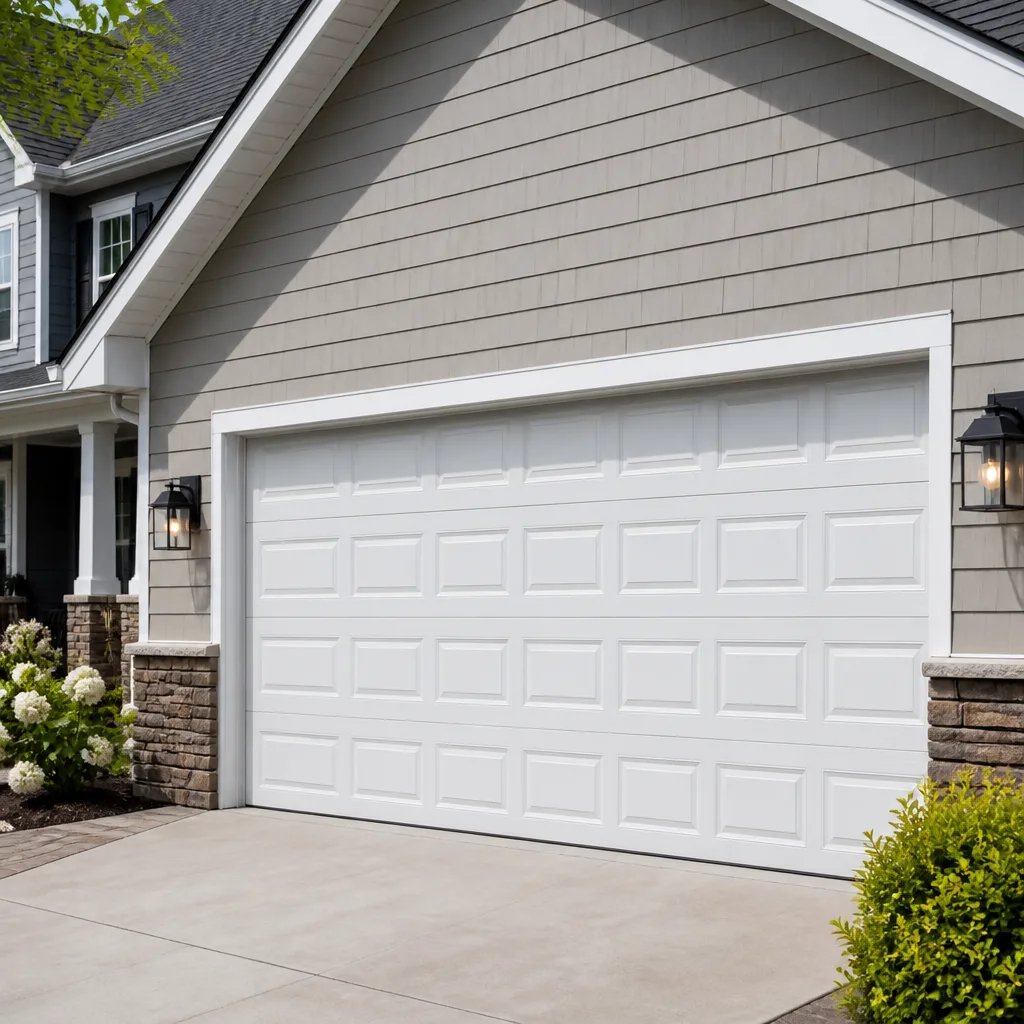 Raised-panel steel
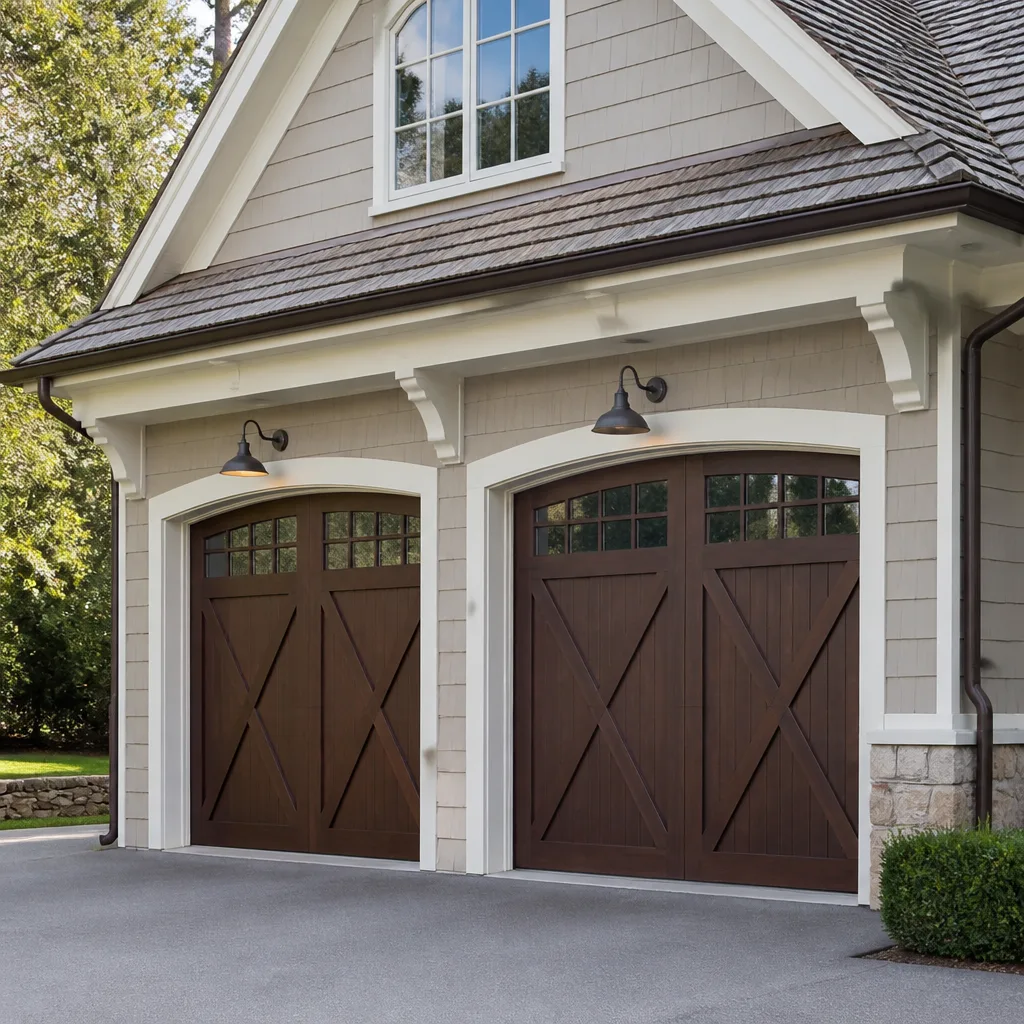 Carriage house
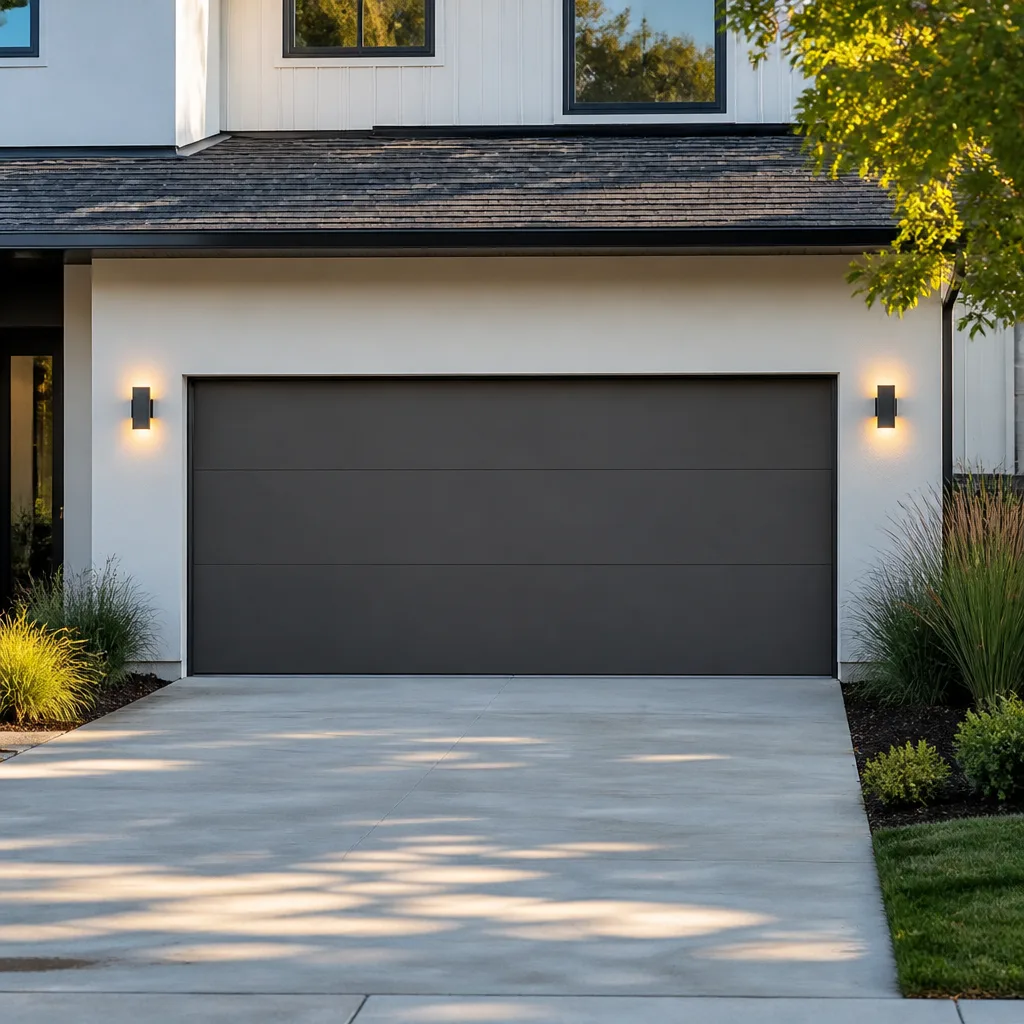 Modern flush
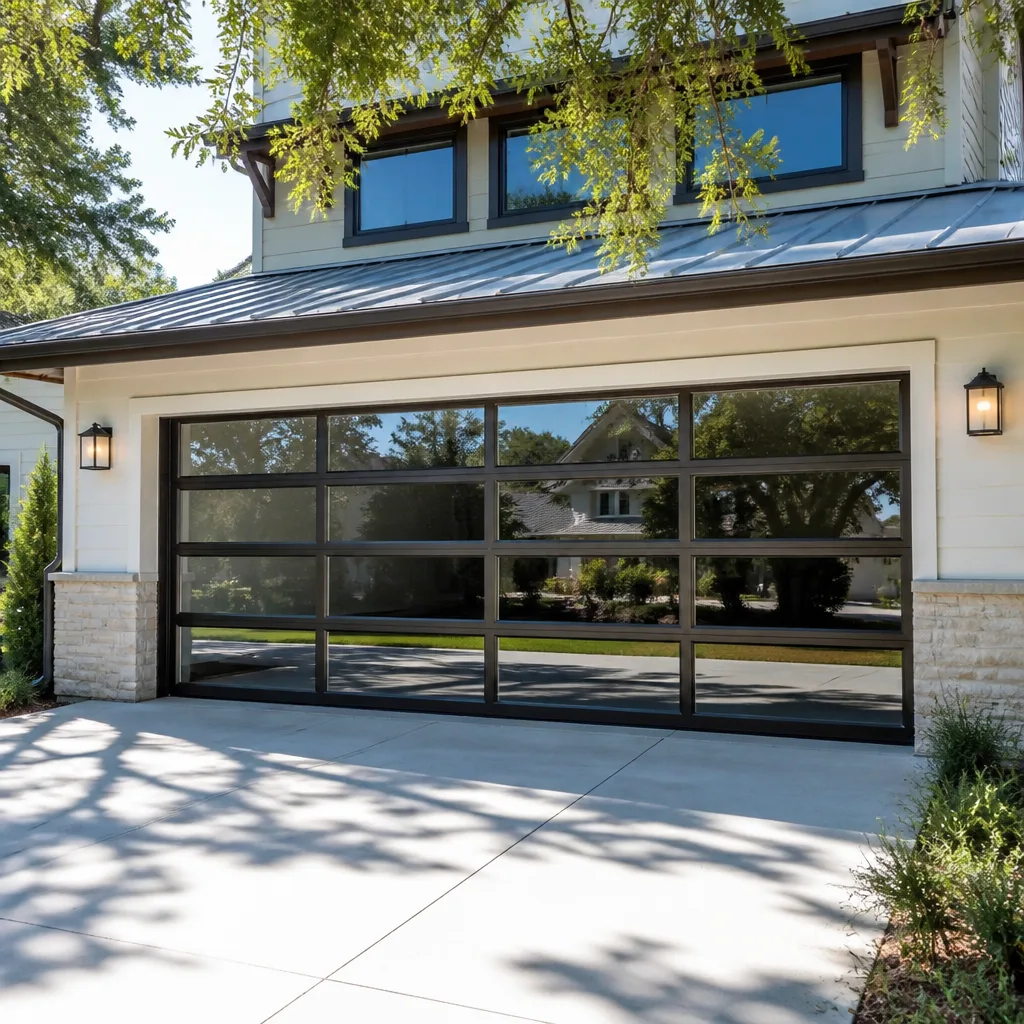 Full-view glass
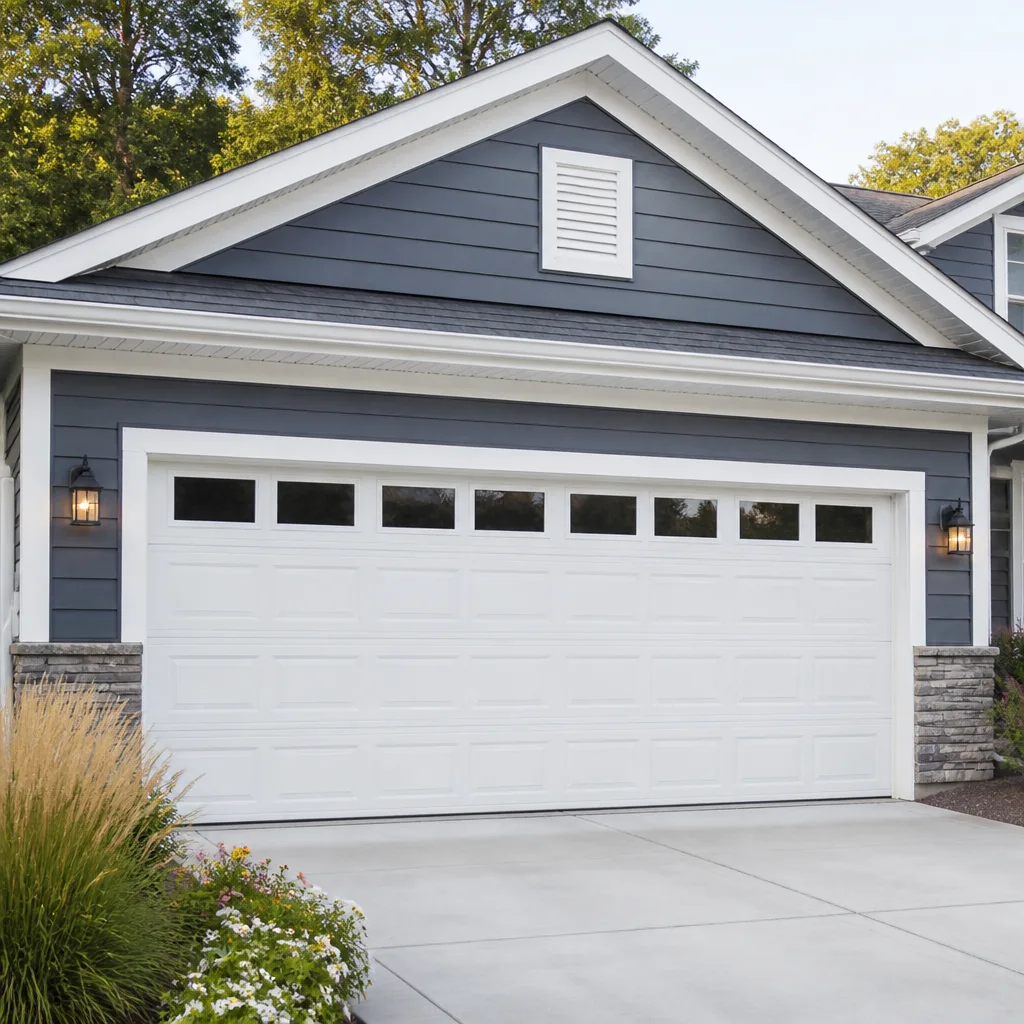 LiftMaster openers
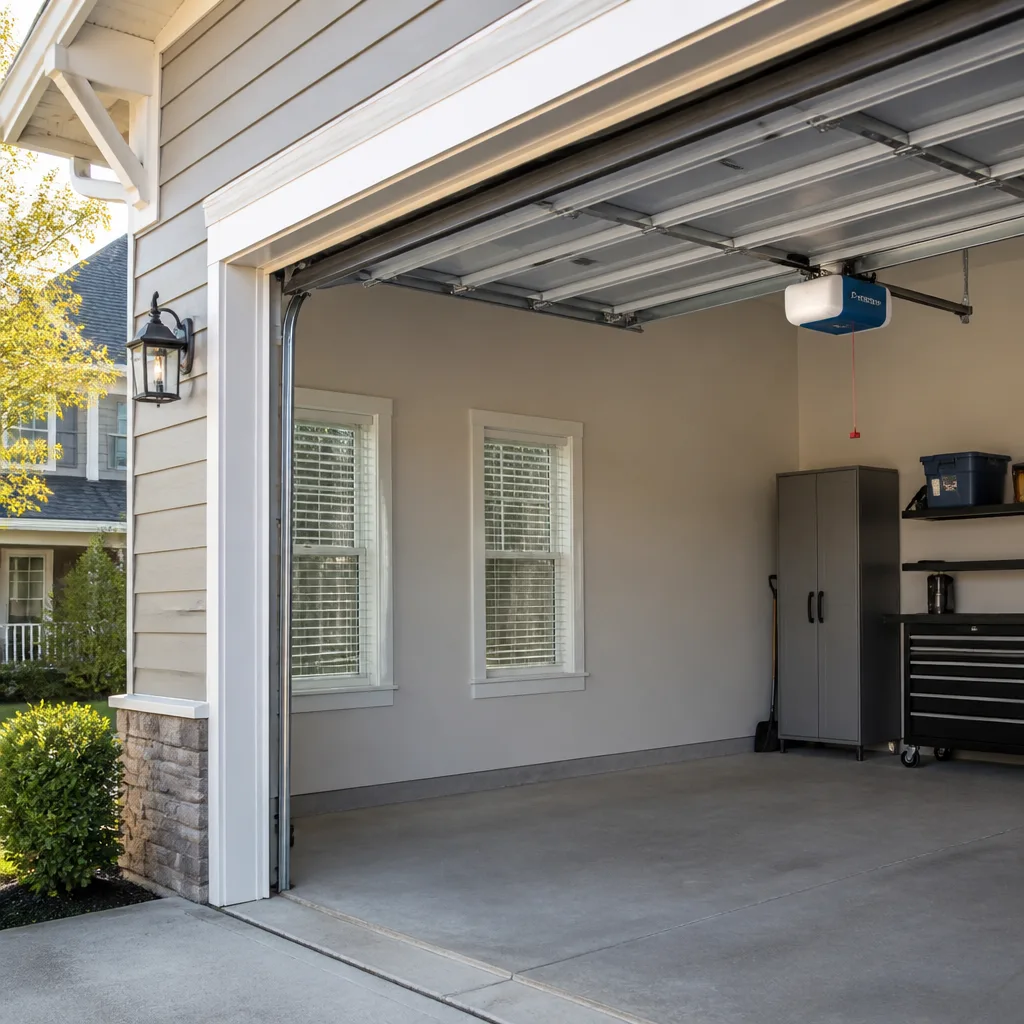 Chamberlain openers
Full 25-point door and opener safety check with every visit - springs, cables, rollers, tracks, and your LiftMaster or Chamberlain opener included
You get a price before we start. It does not change when the pro arrives.
Get your free estimateGarage Door Warning Signs: A McLean Homeowner’s Reference Guide
A grinding noise during the last six inches of travel isn’t a door problem. It’s almost always a roller or track problem. A door that drags only on cold mornings isn’t a motor problem, either; it’s a spring running out of tension. The symptom and its source are rarely the same thing, and that gap is where homeowners lose money on the wrong repair. Garage doors almost never fail without warning. The warnings just look like small annoyances until a cable snaps or a door won’t open on a commute morning. This guide decodes what each sound, sight, and behavior is telling you about which component is actually degrading. We’ve written it for the specific housing stock and weather you deal with in McLean.
Quick Answer
Garage door warning signs fall into three groups: sounds (grinding, squeaking, rattling, popping), visuals (frayed cables, worn rollers, rust on springs), and behavior (uneven travel, mid-cycle reversal, a slow wall button). Grinding points to rollers or tracks, slow cold-weather travel points to spring tension, and a door that reverses on its own points to the safety system or opener logic. Any sign involving cables, springs, or a door that drops is a safety issue that needs same-week attention, not a wait-and-watch. Everything else can usually be scheduled.
Styles & brands we work with
- Raised-panel steel
- Carriage house
- Modern flush
- Full-view glass
- LiftMaster openers
- Chamberlain openers
Table of Contents
- The Noise Diagnosis Matrix: What Each Sound Tells You
- The Visual Signs Most Homeowners Walk Past Every Day
- Behavioral Symptoms Decoded: Travel, Reversal, and Response
- The Sagging Section Test: Catching a Compromised Panel Early
- Wait-and-Watch vs. Same-Week: Sorting the Warning Signs
- Why Brand Matters When a Warning Turns Into a Repair
- How McLean Weather Changes the Warning Timeline
- Common Mistakes to Avoid
The Noise Diagnosis Matrix: What Each Sound Tells You
Sound is the earliest warning a garage door gives you, and it’s the one most people dismiss. A door that has always made a little noise gets a little louder, and nobody notices the drift. In our experience, the most useful thing you can do is identify the type of sound, not just that a sound exists. Different noises implicate different components.
- Grinding: Almost always rollers or tracks. A roller with a worn bearing or a flattened wheel grinds as it rolls through the curve of the track. A track that has been bumped out of alignment produces the same sound at the same point in every cycle. Grinding that gets worse in the last six inches of travel is usually a roller binding at the radius where the horizontal track meets the vertical.
- Squeaking: Metal-on-metal contact with insufficient lubrication, or a torsion spring that has lost its coating. Squeaking is the most forgiving warning sign because it’s often solved by proper lubrication of hinges, rollers, and the spring coil. But a squeak that appears only on one side of the door often means a hinge is loosening or a roller stem is bending.
- Rattling: Loose hardware. Hinge bolts, track brackets, and opener rail bolts work loose over thousands of cycles. Rattling that appears suddenly after a bump to the door usually means a bracket has shifted.
- Popping or banging: The most serious of the four. A loud pop during operation can indicate a torsion spring that is about to fail, a cable that has jumped a drum, or a panel that has come loose from its hinge. Popping is the one noise we treat as urgent.
Where the sound happens in the cycle matters as much as what it sounds like. A noise at the start of travel implicates the vertical track and bottom section. A noise at the top implicates the curved track section and the top panel. A noise that only occurs on the way down versus the way up points to different components, because the door is under different load in each direction. When you call about a noise in McLean, describe where in the cycle it happens. Our technicians use that to load the right tools before they arrive.
The Visual Signs Most Homeowners Walk Past Every Day
Three visual checks catch most door problems before they become failures, and none of them require tools. They take about sixty seconds each, and you should make them part of a monthly routine. This is inspection, not repair. Anything you find, leave to a trained technician.
- Look at the cables. The two cables run from the bottom brackets up to the drums at the top of the door. A healthy cable is uniformly wound and unbroken. Warning signs: fraying strands, kinks, a cable that has slackened and come off the drum, or rust along its length. A frayed cable is a safety issue because the door is held by that cable. Do not touch a cable under tension; call for service.
- Look at the rollers. Rollers should turn freely and sit snugly in the track. Warning signs: flat spots on steel rollers, cracking or missing edges on nylon rollers, a roller that has pulled away from its stem, or a roller that isn’t turning at all and is being dragged. Roller wear is uneven and predictable, and the ones at the bottom of the door wear out first because they carry the most weight through the tightest track curve.
- Look at the springs. Torsion springs sit on a shaft above the door; extension springs run along the horizontal tracks. A light film of surface rust on a plated spring is normal. Deeper pitting, flaking, or a spring that has lost its uniform coil spacing is a sign of fatigue. A rusted spring that has visibly lost tension is a spring that is closer to failure than it looks.
The reason these checks matter in McLean is that most garages here are attached and unheated. An attached garage that swings between cold nights and warmer days sees more condensation than a detached one, which accelerates rust on springs and cables. You won’t notice the rust forming. You’ll notice it after a failure. Put the thirty-second look at cables and springs on your calendar.
Behavioral Symptoms Decoded: Travel, Reversal, and Response
How the door moves tells you where the fault lives. Two doors that both “aren’t working right” can have completely different problems underneath. The three behavioral symptoms worth knowing are asymmetrical travel, mid-cycle reversal, and slow response from the wall button versus the remote.
Asymmetrical travel means one side of the door reaches the top or bottom before the other. A door that closes with one corner hitting first, or opens with one side lagging, is usually running on springs with unequal tension, a cable that has stretched or slipped, or a track that has been pushed out of plumb. This is often a spring-tension problem, not a motor problem, which is why swapping the opener never fixes it.
Mid-cycle reversal is the door stopping and reversing partway through a cycle. It points to the safety system, not the mechanical door. The most common cause is an obstruction in the photo-eye beam, a dirty lens, or a misaligned sensor after a bump. If a door reverses on its own with nothing in the way, and the sensors look clean and aligned, the opener’s logic board or limit settings may need attention. Mid-cycle reversal is a safety-system issue because the reverse is the system working as designed. What’s failing is the sensor or its wiring.
Slow or inconsistent response from the wall button versus the remote narrows the fault to one of two places. If the wall button works and the remote doesn’t, the problem is the remote, its battery, or the opener’s radio receiver. If both are slow but the wall button works immediately, the issue is usually in the opener’s travel settings or a bound-up door. If neither responds, check the power and the opener’s circuit board. We see a lot of LiftMaster and Chamberlain systems in McLean where a sluggish remote turned out to be a receiver issue, not a battery.
The Sagging Section Test: Catching a Compromised Panel Early
Panels fail from the inside out. Water gets behind the outer skin at the hinge points and seams, the internal structure weakens, and the panel starts to deflect. By the time a crack or rust-through appears on the outside face, the panel has been compromised internally for a while. The sagging section test catches the problem before it becomes visible.
- With the door closed, stand inside the garage and look up at the underside of the door panels from a low angle, nearly parallel to the surface.
- Scan across each panel for a section that dips or bows relative to the ones next to it. A small bow in the middle of a panel is the earliest sign.
- Run a straight edge vertically along the door at the hinge lines. Any gap between the straight edge and the panel at the hinge is a deflection sign.
- Check the bottom section closely. It takes the most moisture from snowmelt and washing, and it usually fails first.
- Look at the hinge attachment points for elongated or rusted screw holes. A hinge that has pulled loose has already stressed the panel.
What makes this test worth doing in McLean is the housing mix. Many of the neighborhoods here have older doors, and panel fatigue in a door that’s been in place a while is common. If a panel is bowing, the fix isn’t always a new door. A single section can often be replaced if the model and color are still available, which is where knowing your brand helps. A Clopay or Amarr panel can usually be matched. A discontinued door means we talk through replacement options in a written estimate rather than guessing.
Wait-and-Watch vs. Same-Week: Sorting the Warning Signs
Not every sign needs a same-day call, and telling you otherwise would be dishonest. What matters is knowing the difference, because the cost of waiting on the wrong sign is real.
Reasonable to wait and watch:
- Occasional squeaking that stays mild
- A single roller that has flattened with the rest looking healthy
- Surface rust on plated springs with no change over weeks
- Rattling that you can trace to a loose hinge bolt
These are worth scheduling for a repair visit, not worth treating as emergencies. Watch them for changes and address them before they cluster into a bigger problem.
Same-week attention, at minimum:
- Grinding that appeared suddenly and has gotten worse each cycle
- A door that reverses on its own with a clear path
- Asymmetrical travel that wasn’t there before
- A slow wall button or remote that no longer responds reliably
- A panel that’s visibly bowing
Call now – this is a safety issue:
- A frayed, kinked, or slack cable
- A spring that has visibly lost tension or is making a popping sound
- A door that has come off its tracks or is hanging unevenly
- Any door that drops or free-falls when you’re near it
The springs and cables are the dangerous parts. They’re under constant, extreme tension. A failing spring can let go without warning, and the force in a torsion spring is not something to inspect by hand. Do not attempt to tighten, replace, or remove a spring or cable yourself. That’s a job for a technician with the right tools and the training to use them safely. Everything else on the list is about scheduling, not safety. Springs and cables are about safety, not scheduling. Our garage door spring repair work exists precisely because those calls shouldn’t be DIY.
Why Brand Matters When a Warning Turns Into a Repair
Garage door systems are not interchangeable. An opener from Genie operates its safety reverse and travel limits differently from a LiftMaster or Chamberlain unit. A Raynor door has different section profiles, hinge placements, and spring setups than a Clopay. When a warning sign turns into a repair, the technician needs to know which system is in front of them, because the diagnostic sequence and the replacement parts differ.
This is where a lot of homeowners get stuck with a generalist. A handyman or a multi-trade contractor may know how to replace a roller or tighten a bracket, but brand-specific problems get missed. A Genie opener with a failing logic board looks the same as a LiftMaster with a bad receiver to someone who doesn’t work on both. We do. We’re trained on eight major brands: LiftMaster, Chamberlain, Genie, Clopay, Amarr, Wayne Dalton, Craftsman, and Raynor. That means the technician who comes out diagnoses the exact system in your garage, not a generic stand-in.
The practical benefit shows up in three places. First, the diagnosis is faster because the tech recognizes the symptoms specific to that brand’s design. Second, the parts match. A Clopay panel replacement only works if the section is the right profile, and a Chamberlain safety sensor only works if it’s compatible with that opener’s receiver. Third, when a repair reveals a door beyond saving, we don’t hand you off to another company. We do full installation too. Our garage door repair visits often start with one symptom and end with a written estimate for whichever path makes sense: repair the part, replace the section, or replace the door.
How McLean Weather Changes the Warning Timeline
Springs are the component most affected by temperature, and that matters here. In Virginia’s climate, we get cold snaps that drop overnight temperatures sharply and then warm back up during the day. A garage attached to the house will sit near the outdoor temperature overnight and warm slightly when the house runs. That swing is what stresses a torsion spring. The cold makes the steel less elastic, so a spring that’s already carrying reduced tension has less margin. That’s why a door that opens easily in September suddenly drags in January.
What this means practically: if your door is slow or heavy on cold mornings but fine by afternoon, the symptom is temperature-related and the source is a spring nearing the end of its service life. It’s not a battery issue or an opener issue, and it’s not going to fix itself when the weather warms. The spring’s usable cycles are being used up every time you operate the door.
McLean’s housing stock adds another layer. Older doors in the area have often been through more seasonal cycles than the age of the door suggests, because they’ve been in service across many winters. If you’re in a home with an older LiftMaster or Chamberlain opener and the door has started dragging, that combination is worth a look. The opener may be fine; it’s the door’s spring system that needs attention. The right fix for your specific system starts with a proper diagnosis, not with assuming the opener is the problem.
We work on the brand already in your garage, and we see plenty of older systems in McLean that just need a spring or a cable. When your door won’t move, we will, and that includes the cold-morning dragging that feels like a motor failure but usually isn’t.
Common Mistakes to Avoid
- Replacing the opener when the problem is the door. A slow, heavy, or noisy door is usually a spring, roller, or track issue. Swapping the opener leaves the real fault in place and costs more than the fix would have.
- Touching a spring or cable yourself. Both are under extreme tension and can release without warning. There is no safe DIY version of this repair, and no inspection that justifies putting your hands on a loaded spring.
- Ignoring a small noise because it’s been there a while. Warning signs don’t resolve. They progress. A squeak that’s been present for a season is a component that’s been wearing for a season.
- Assuming a slow remote means a dead battery. If the wall button works and the remote doesn’t, the battery is one possibility. The remote’s radio or the opener’s receiver is another. Diagnose before replacing.
- Letting a frayed cable ride until it fails. A frayed cable is what’s holding one side of your door. The failure isn’t gradual, and it happens when the door is under load.
- Skipping the monthly visual check. Thirty seconds at the cables and springs catches more failures than a year of listening for noises.
- Calling a generalist for a brand-specific problem. Knowing which symptoms belong to which brand’s system is the difference between a real diagnosis and guesswork. This is the whole reason we stay garage-doors-only.
See the difference
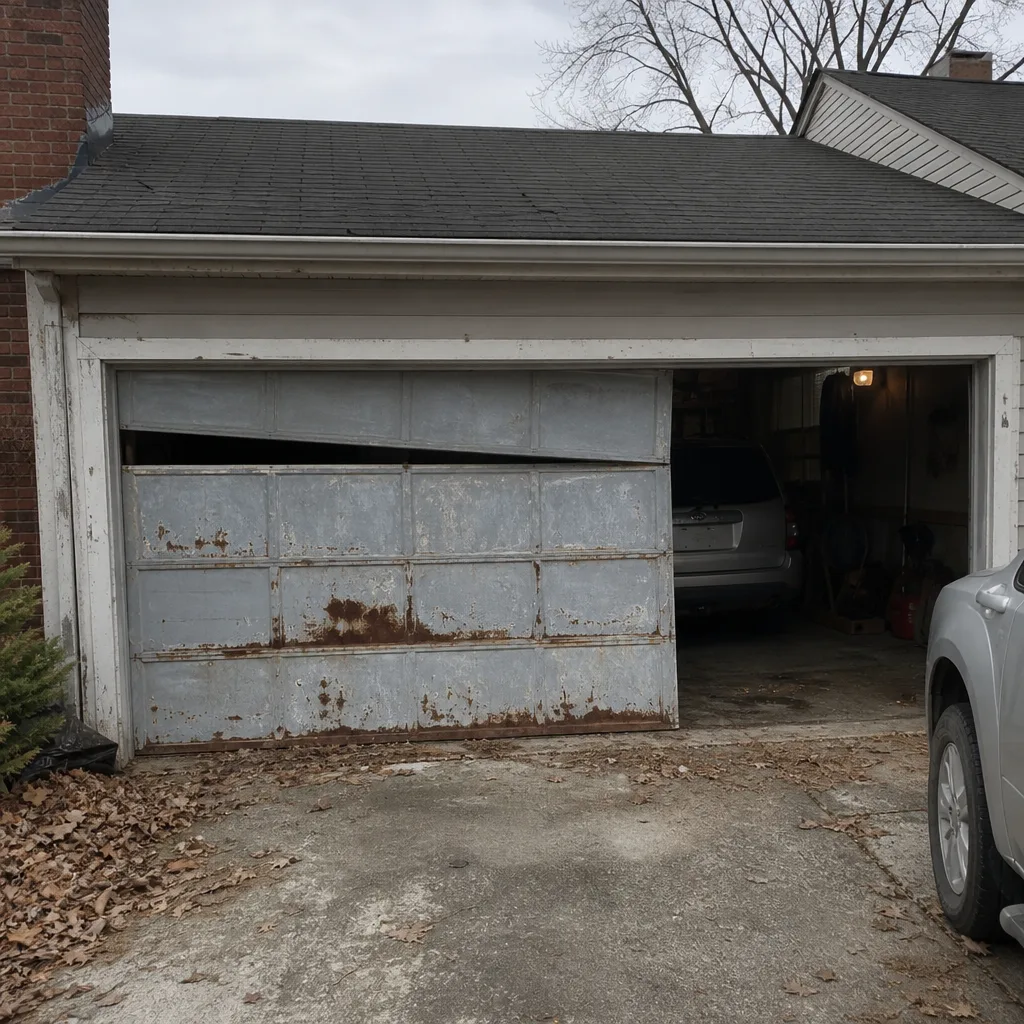 Before
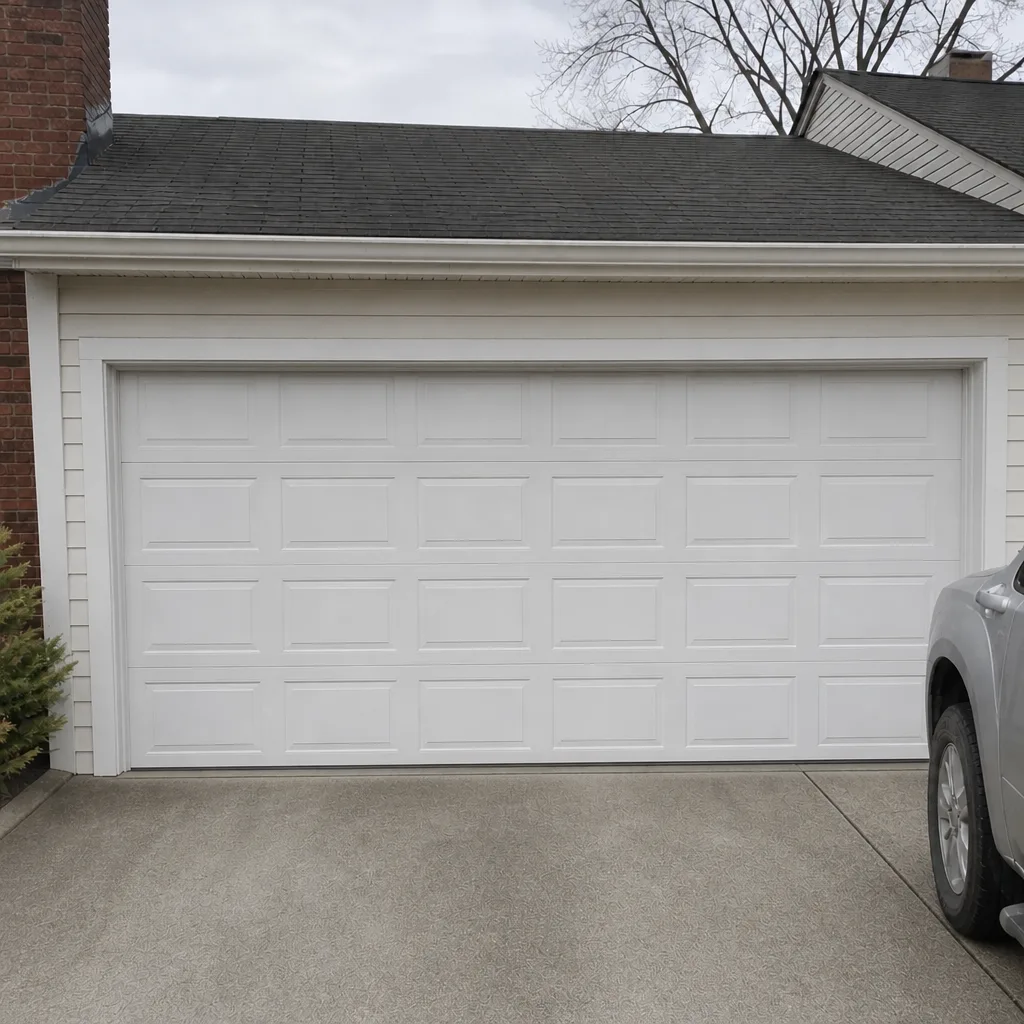 After
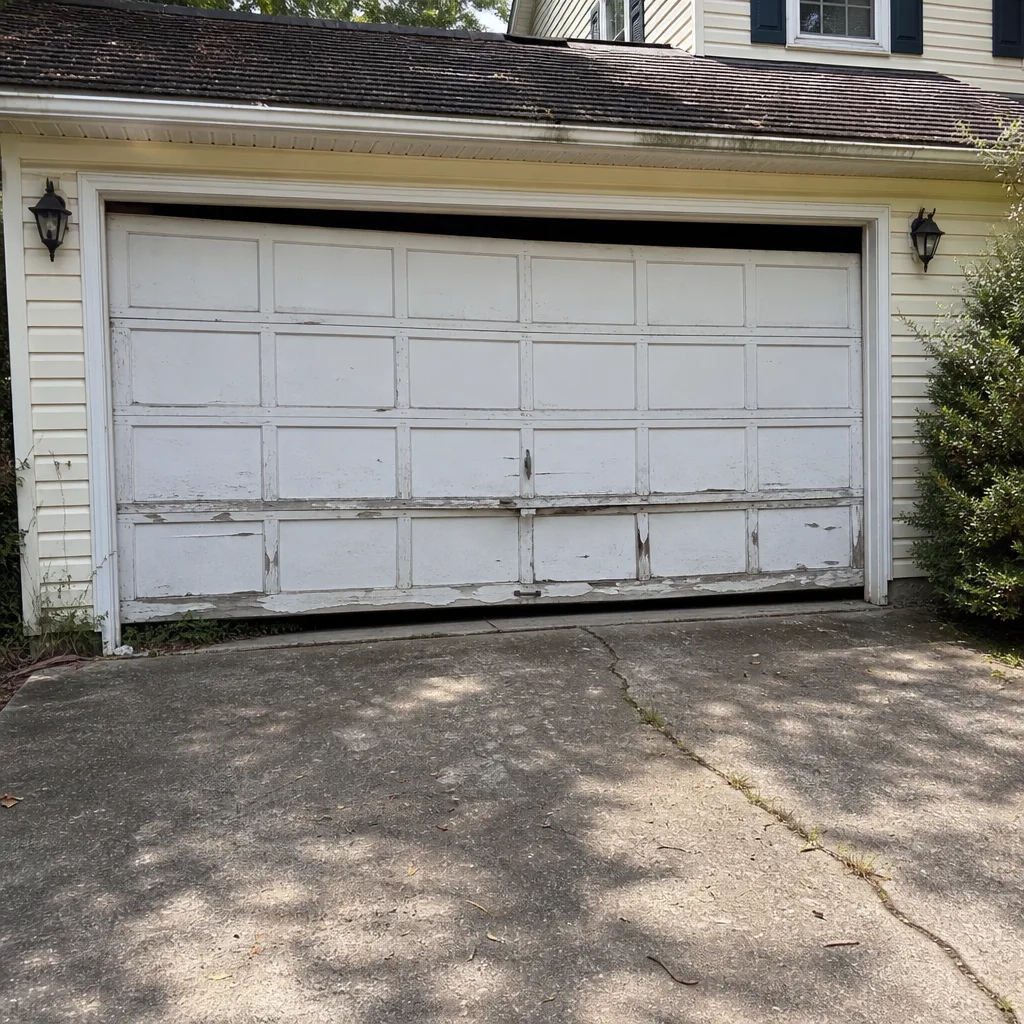 Before
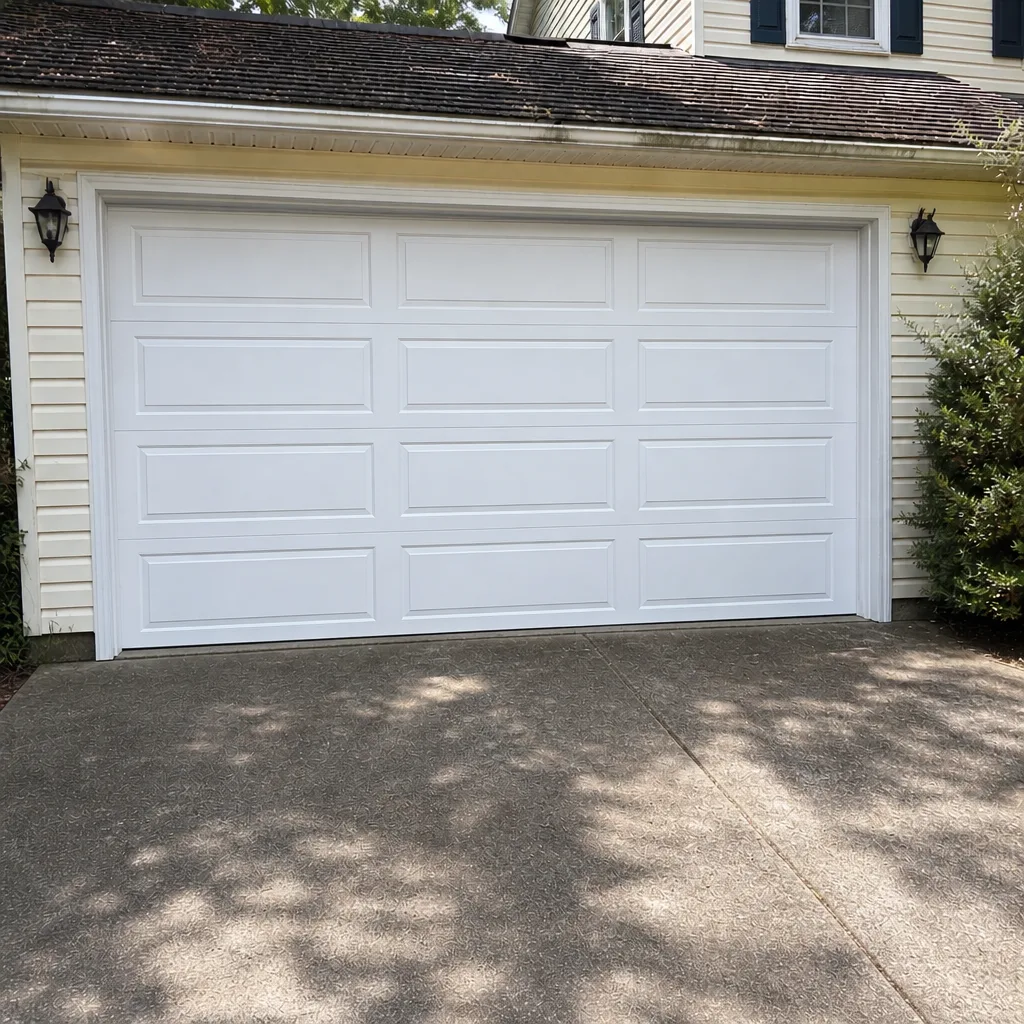 After
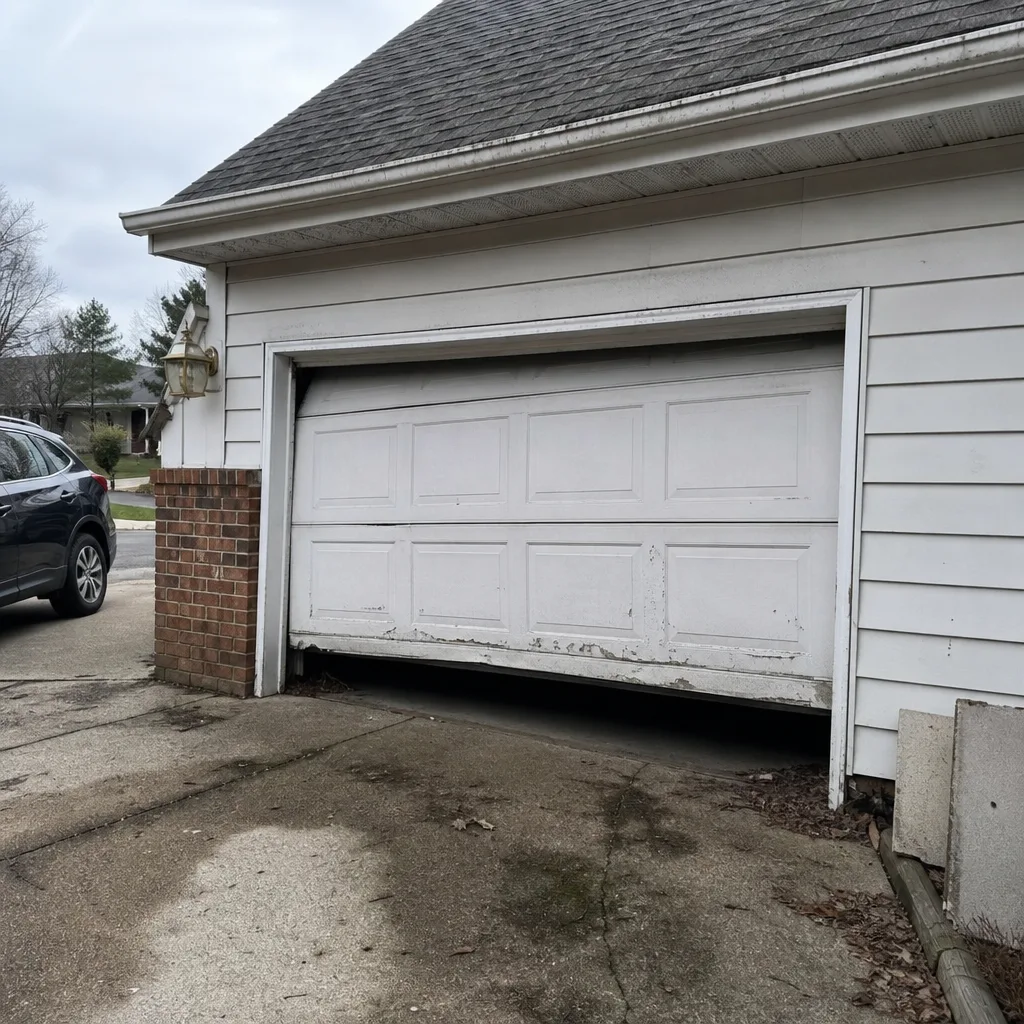 Before
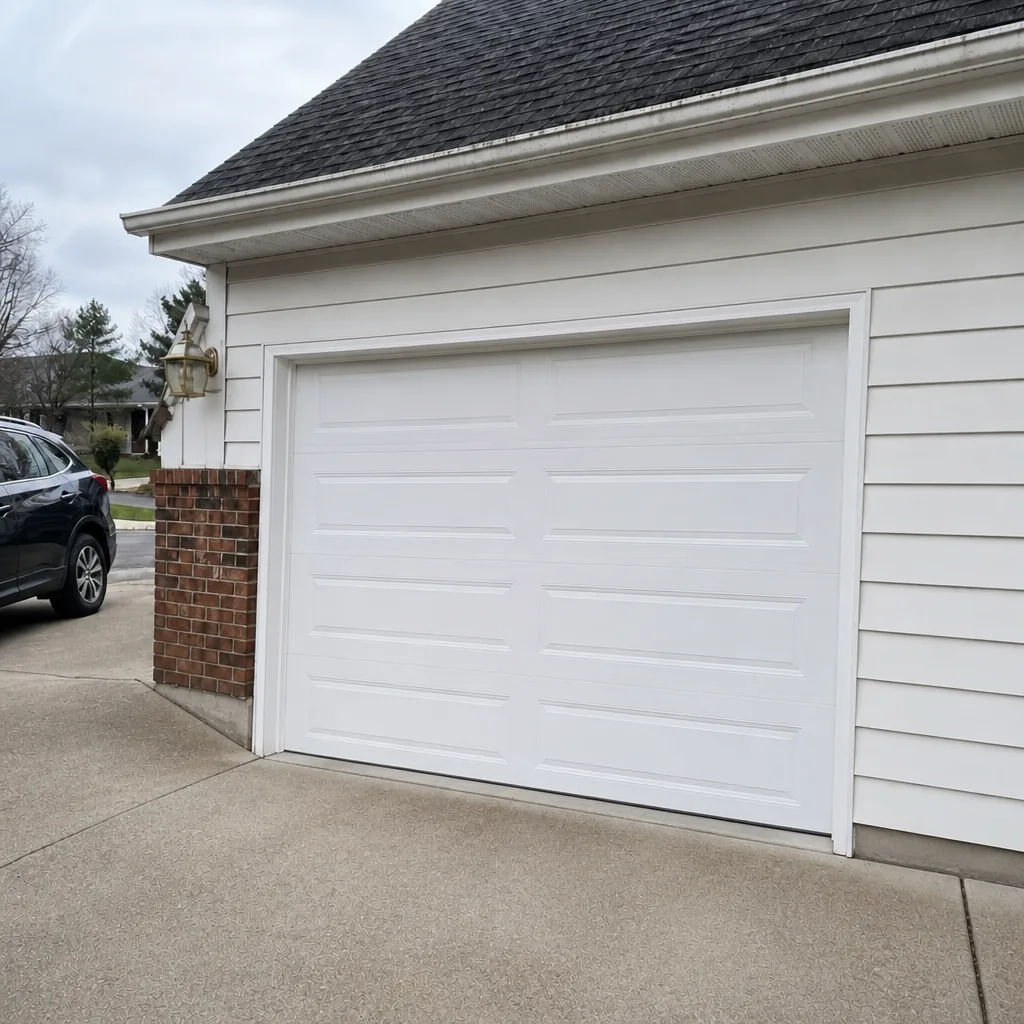 After
When to Call a Professional
Call a professional when you find a frayed or slack cable, a spring that’s lost tension or is popping, a door that has come off its tracks, or a door that’s dropping or hanging unevenly. These are safety issues, and they should get same-week attention at the latest. Call when a grinding noise appears suddenly and worsens, when the door reverses with a clear path, when travel is asymmetrical, or when a panel is visibly bowing. Those are scheduling issues, not emergencies, but they don’t fix themselves. And call when the wall button or remote stops responding reliably, because that’s a diagnostic job, not a battery swap.
McLean Garage Door Repair Pros offers free estimates in McLean. Call (844) 493-7480. We answer 24/7. Fast dispatch from 7am to 7pm, Sunday through Friday. Our technicians have up to 12 years of experience, and we work on the brand in your garage from LiftMaster to Genie to Raynor. Every price is quoted and agreed before any work starts. No surprises after. See our McLean Garage Door Repair Pros page for the full service range.
Frequently Asked Questions
The first warning sign is usually a change in sound: a grinding, squeaking, or rattling that wasn’t there before, or one that’s gotten worse over a few weeks. Sound comes before visible damage in most components. The next most common early sign is a door that gets noticeably slower on cold mornings. If you only check one thing, listen to the door while it moves and compare it to how it sounded a month ago.
Anything involving springs, cables, or a door that drops or hangs unevenly is a safety issue and needs same-week attention. Sound and wear on rollers, hinges, and the opener are maintenance items you can schedule. Cables and springs are under extreme tension, and a failure there happens without warning. Do not inspect them by hand beyond a visual check for fraying or slack. Call (844) 493-7480 for an exact quote if you’re unsure which category your symptom falls into – estimates are free.
No, and no reputable guide will tell you otherwise. Torsion and extension springs store enough energy to cause serious injury if they release during handling. The tools and technique required are specific, and the risk of getting it wrong is severe. Spring repair is one of the most demanding jobs in this trade, and it’s a job for a technician. This is why spring repair is a named specialty at our shop, and it’s not a job we’d suggest to a homeowner. Call (844) 493-7480 and we’ll quote it in writing before any work starts.
Cold weather reduces the elasticity of the steel in a torsion spring, so a spring that’s near the end of its life feels noticeably heavier in January than in September. It’s a spring-tension issue, not an opener issue. If your door drags on cold mornings and improves as the day warms, the spring’s usable life is being used up. It’s worth a diagnosis before the failure happens under load. Call (844) 493-7480 for a free estimate – we’ll tell you whether it’s the spring, the rollers, or something else.
If the wall button works and the remote doesn’t, the problem is in the remote, its battery, or the opener’s radio receiver, not the door. If both are slow but the wall button responds immediately, the issue is likely in the door’s travel settings or a bound-up door. On a LiftMaster or Chamberlain unit, the receiver is the usual suspect for a slow remote. We diagnose both sides before recommending a part. Call (844) 493-7480 for a written estimate before any work begins.
For noise, roller wear, rattling, and surface rust, you can reasonably schedule a visit rather than rush it. For frayed cables, a spring that’s lost tension, a door off its tracks, or a door that drops, don’t wait – those are safety issues. Anything that’s suddenly appeared and gotten worse in a week is a same-week call. The written estimate sets the final price, and you’ll know before any work starts. Call (844) 493-7480 for a free estimate on a time-sensitive door.
When your door won’t move, we will. If a door fails on a Saturday, call us and we’ll book you for Sunday, since we’re closed Saturdays. We answer 24/7; a call outside dispatch hours is booked into the next opening, Sunday through Friday, 7am to 7pm.
The Bottom Line
Garage doors fail in predictable ways, and the warning is almost always present before the failure. The trick is decoding it, because the symptom and its source are rarely the same thing. Grinding is rollers or tracks. Slow cold-morning travel is spring tension. Mid-cycle reversal is the safety system. A sagging panel is internal compromise you can catch with a straight edge. Sort every sign into one of three buckets: wait and watch, schedule it this week, or call now because it’s a safety issue. Springs and cables always belong in the third bucket. Keep a monthly eye on cables, rollers, and springs, and put a technician on anything that’s changed suddenly or gotten worse. Our garage door opener repair and repair services cover the whole system, so a small warning never has to become a costly failure in McLean.
Call (844) 493-7480 for a free estimate. We answer 24/7. Fast dispatch from 7am to 7pm, Sunday through Friday. The price is quoted and agreed before any work starts, and the written estimate sets the final price.
Written by the team at McLean Garage Door Repair Pros.